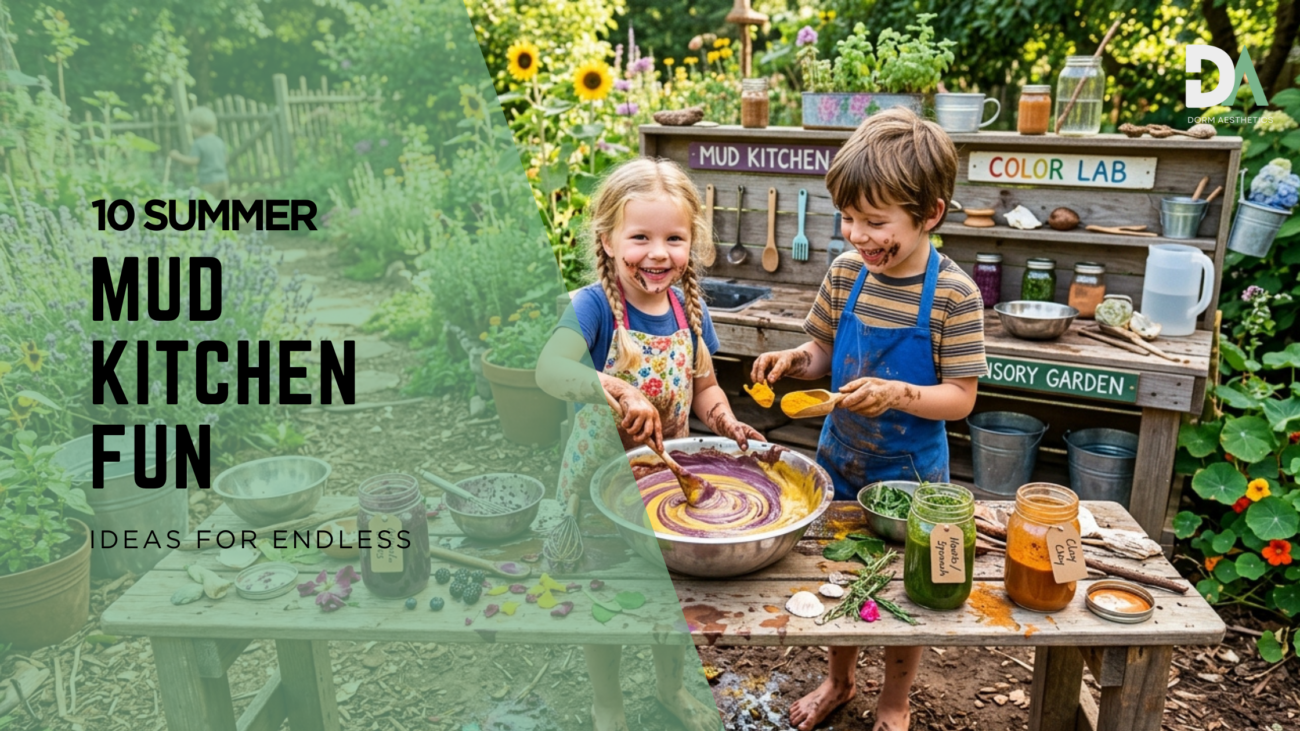
A mud kitchen is one of the best ways to keep kids busy in summer. It is simple, creative, and completely open-ended. Children don’t need expensive toys—they just need soil, water, and a safe outdoor space. A well-designed mud kitchen helps kids explore, learn, and use their imagination while staying active outside.
Below are 10 fun and practical summer mud kitchen ideas that make outdoor play more exciting and engaging.
Related article :Summer Kids Crafts
Why Kids Love Summer Mud Kitchen Activities
Summer is the perfect season for mud kitchen play. Children can spend more time outdoors, explore nature, and enjoy hands-on activities that encourage creativity and learning. A mud kitchen gives kids the freedom to mix, pour, stir, and create imaginative recipes using natural materials such as mud, water, leaves, flowers, and stones.
These activities help develop fine motor skills, problem-solving abilities, and social interaction while providing endless entertainment. Whether you have a large backyard or a small outdoor space, a mud kitchen can become a favorite place for summer fun.
Benefits of Mud Kitchen Play
Mud kitchen activities offer much more than simple outdoor entertainment. They encourage creativity by allowing children to invent recipes and create imaginative play scenarios. Kids also improve their sensory skills as they explore different textures, materials, and natural elements.
Playing in a mud kitchen can help develop communication and teamwork when children play together. It also encourages outdoor activity, reducing screen time and helping children connect with nature.
Related Articals: Summer Mud Kitchen Fun Ideas
Essential Mud Kitchen Supplies
Before getting started, gather a few basic supplies to create a fun and engaging mud kitchen experience:
- Mixing bowls
- Pots and pans
- Wooden spoons
- Measuring cups
- Water containers
- Flower petals
- Leaves and grass
- Small stones and pebbles
- Muffin trays
- Old kitchen utensils
These simple items can turn any outdoor space into a creative play area.
Safety Tips for Mud Kitchen Play
While mud kitchens are generally safe, a few precautions can make playtime even better:
- Always supervise younger children.
- Use child-safe and non-toxic materials.
- Remove any sharp objects from the play area.
- Encourage children to wash their hands after play.
- Check outdoor materials for cleanliness before use.
- Keep water containers at a safe level for younger children.
By following these simple safety tips, children can enjoy hours of outdoor fun safely.
Related Articals: seasonal bird bath decor ideas
1. Basic Wooden Mud Kitchen Setup
A basic wooden mud kitchen is one of the simplest and most popular setups for outdoor play. It is fun because it allows children to copy real kitchen activities like cooking, mixing, and serving food, but in a completely safe and creative outdoor environment. Kids enjoy feeling independent while using their imagination to “cook” mud pies, soups, and natural recipes. This kind of play keeps them engaged for long periods without screens and encourages teamwork when they play with siblings or friends.
For materials, you usually need a small wooden table, old wooden pallets, a bench, or even a repurposed cabinet. Add simple kitchen items like bowls, pots, pans, spoons, cups, and measuring containers. Natural materials such as mud, water, leaves, flowers, and small stones complete the setup.
This setup is best suited for children aged 2 to 10 years, with supervision for younger kids.

2. Flower and Nature Soup Station
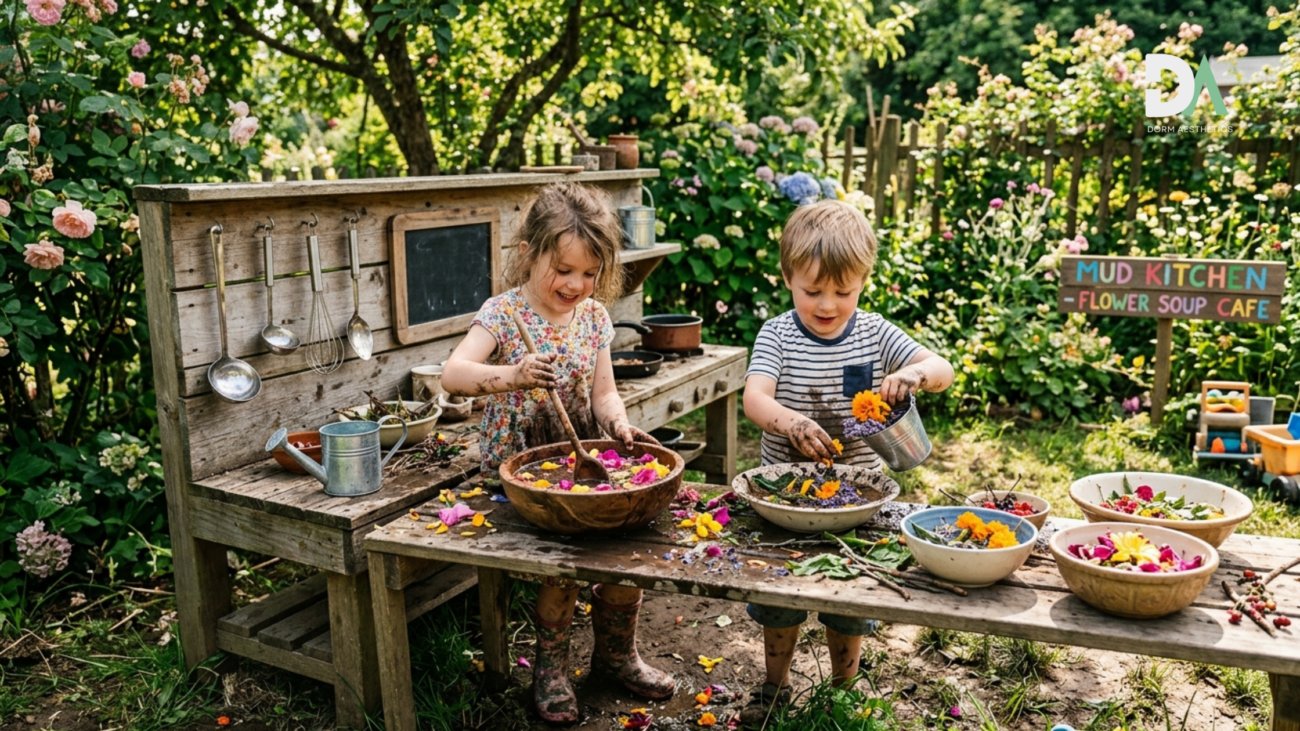
A flower and nature soup station is a highly creative mud kitchen idea where children use natural elements to “cook” imaginary soups and recipes. It is fun because kids get to explore colors, textures, and scents from flowers, leaves, and grass while pretending to prepare magical meals. This type of play keeps their imagination active and makes outdoor time exciting, especially in summer when fresh flowers and plants are easily available.
For materials, you will need simple bowls, pots, cups, and spoons. Add natural ingredients like flower petals, leaves, grass, small twigs, water, and pebbles. A mixing area such as a wooden table or old kitchen station works perfectly. You can also include small baskets for collecting flowers and natural items.
This activity is ideal for children aged 3 to 10 years. Younger kids will enjoy sensory exploration, while older children can create more detailed “recipes” and storytelling games with friends.
Related Articals: garage door decoration ideas
3. Mud Baking Corner

A mud baking corner is a fun outdoor setup where children can pretend they are running a bakery using mud and natural materials. It is enjoyable because kids love role-playing real-life activities, and baking imaginary cakes, cookies, and pies gives them a sense of creativity and achievement. They can mix, shape, and decorate their “baked goods,” which keeps them engaged for long periods and helps improve focus and imagination.
For materials, you will need small bowls, trays, muffin tins, old baking pans, spoons, and mixing cups. Natural items like mud, sand, water, leaves, flower petals, and small stones can be used as ingredients or decorations. You can also add cupcake molds or empty containers to make the play more realistic and exciting.
This setup is perfect for children aged 3 to 10 years. Younger kids enjoy sensory mixing, while older children enjoy detailed pretend baking and storytelling games.
Related Articals: DIY Graduation Banner Ideas
4. Water Mixing Lab Station
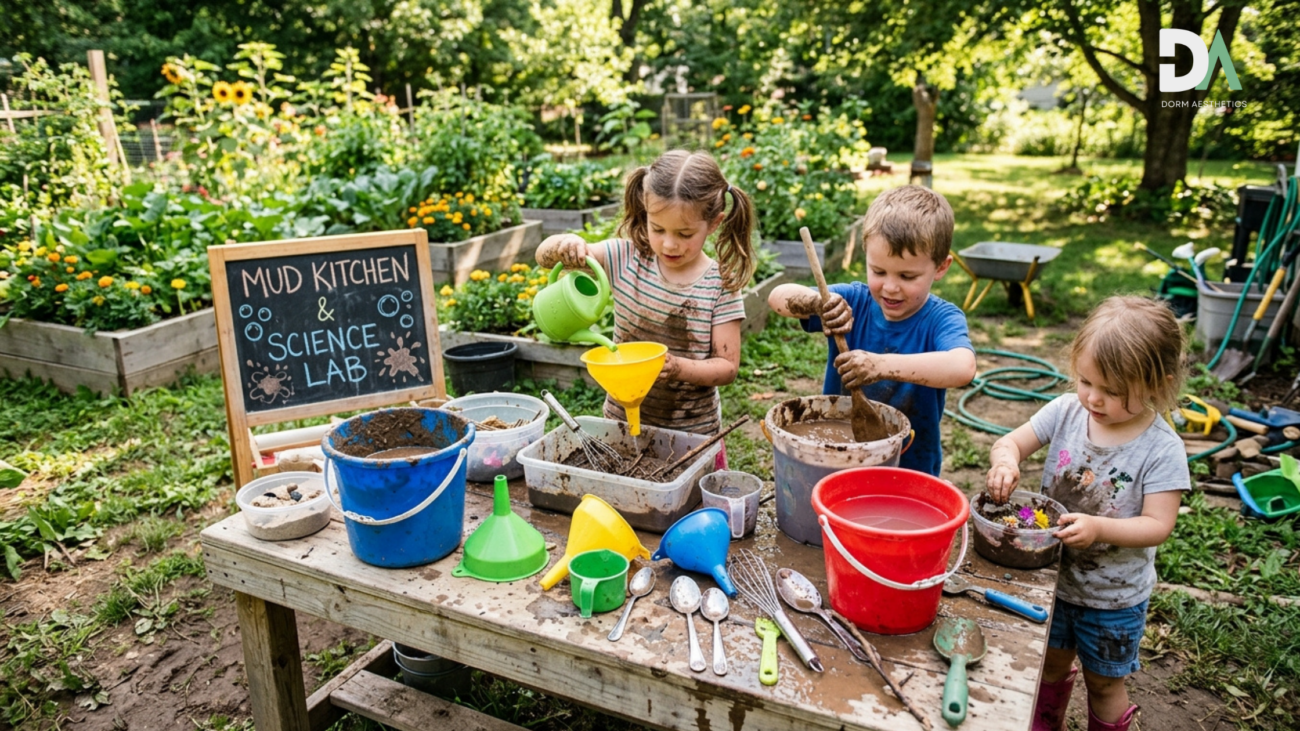
A water mixing lab station is an exciting mud kitchen idea where children can experiment with water, mud, and natural materials like little scientists. It is fun because kids love pouring, mixing, and observing how different textures change when water is added. This type of play feels like a real science experiment, which keeps them curious, engaged, and entertained for a long time, especially during hot summer days.
Related Article: best DIY grill station cheap
For materials, you will need different sized containers such as bowls, cups, jars, and buckets. Add tools like spoons, funnels, measuring cups, and ladles to make pouring and mixing easier. Natural elements like mud, sand, leaves, small stones, and flower petals can be included to create different “experiments” and textures.
This activity is best for children aged 3 to 10 years. Younger kids enjoy simple pouring and splashing, while older children can create more structured experiments and pretend science games with friends.
Related Articals: Creative Mud Kitchen Sink Ideas
5. Mini Herb Kitchen Garden Play

A mini herb kitchen garden play station is a creative mud kitchen idea where children combine gardening and pretend cooking. It is fun because kids enjoy digging, planting, and picking small herbs while imagining they are chefs preparing fresh meals. This type of play feels real and meaningful, as they see how plants grow and can use them in their pretend recipes, which makes the experience both educational and entertaining.
Related Article: Beautiful flower themed bird bath ideas
For materials, you will need small pots or planting boxes, soil, watering cans, and simple gardening tools like mini shovels and scoops. Add herbs such as mint, basil, parsley, or coriander if available. You can also include bowls, spoons, and containers so children can “harvest” and use their herbs in mud kitchen dishes.
This setup is ideal for children aged 4 to 10 years. Younger kids enjoy watering and digging, while older children learn basic gardening skills and enjoy more detailed imaginative cooking games.
Related Article: 10 boho style front porch ideas for a Cozy vibe
6. Color Mixing Mud Station

A color mixing mud station is a creative and exciting mud kitchen idea where children explore colors while playing with mud, water, and natural materials. It is fun because kids love experimenting and discovering how different colors mix together to create new shades. This type of play feels like art and science combined, keeping children curious, engaged, and entertained for a long time, especially during outdoor summer activities.
Related Article: smart small apartment porch ideas
For materials, you will need small containers, cups, jars, spoons, and trays for mixing. You can add natural items like colored flower petals, leaves, mud, sand, and water. To make it more interesting, you can also include natural dyes from plants, fruits, or safe food coloring so children can see clear color changes while mixing.
This activity is best for children aged 3 to 10 years. Younger kids enjoy simple mixing and watching colors change, while older children can experiment more deeply by creating patterns, shades, and imaginative “recipes” using colors.
Related Article: Budget friendly grill station ideas
7. Shell and Stone Cooking Area
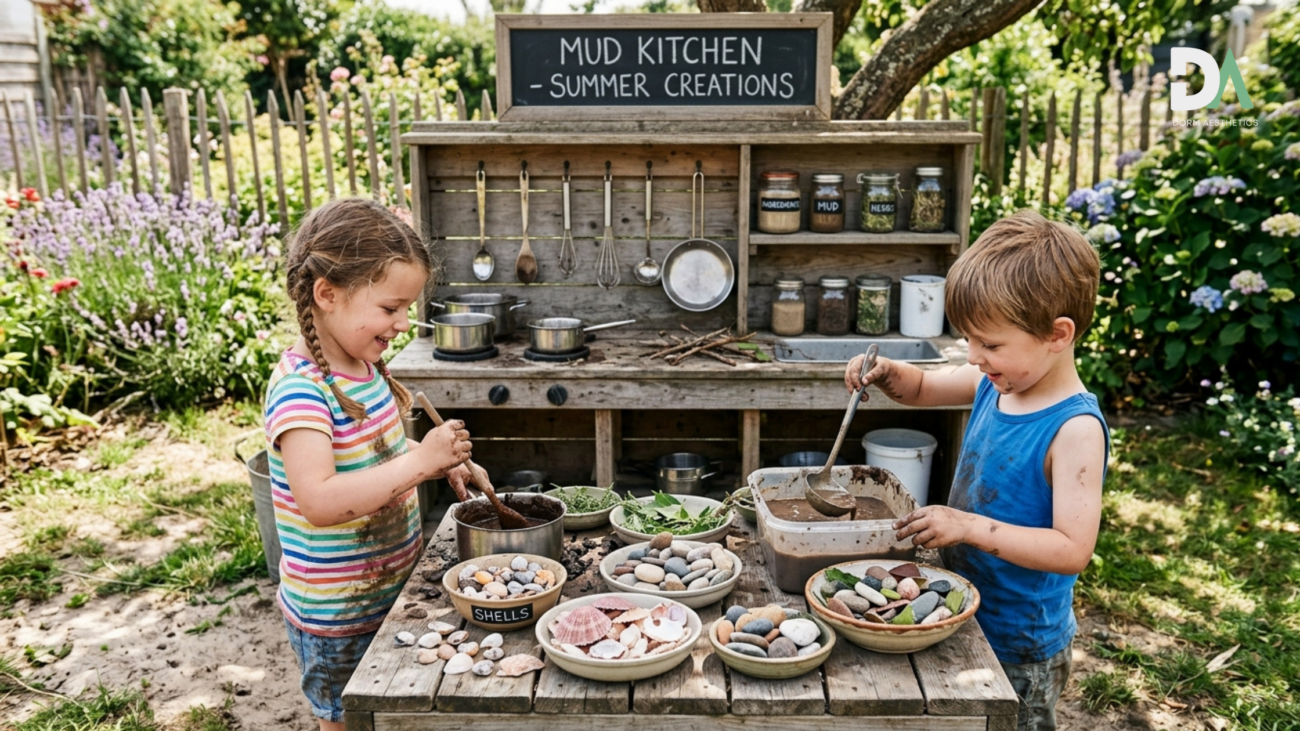
A shell and stone cooking area is a simple but highly engaging mud kitchen idea where children use natural materials like shells, stones, and pebbles to create pretend meals. It is fun because kids enjoy collecting different shapes and textures from nature and using them as ingredients in their imaginative cooking games. This type of play feels like a mini adventure, especially if the shells or stones are gathered during outdoor walks, making the activity even more exciting and meaningful.
For materials, you will need bowls, trays, spoons, cups, and small containers for mixing and serving. Natural items like clean stones, pebbles, shells, mud, sand, leaves, and water can be used as ingredients. You can also add muffin trays or old kitchen pans to help children organize their “cooking” setup more realistically.
This activity is ideal for children aged 3 to 10 years. Younger kids enjoy touching and sorting different textures, while older children create more detailed pretend recipes and storytelling games using their collected natural materials.
Related Article: 10 diy colourful bird bath ideas
8. Chalkboard Recipe Wall

A chalkboard recipe wall is a creative addition to any mud kitchen that lets children design and write their own pretend recipes before they start playing. It is fun because kids enjoy feeling like real chefs, planning what they are going to “cook” and then acting it out in their mud kitchen. Writing or drawing recipes also adds an educational element, helping them develop early writing skills, creativity, and storytelling ability.
For materials, you will need a small chalkboard or a painted board wall where chalk can be used safely. Add colorful chalk sticks, erasers, and simple clips or hooks to display recipe cards. You can also include paper cards for kids who prefer drawing instead of writing. In the mud kitchen area, keep bowls, spoons, mud, water, and natural items like leaves and flowers to match their recipes.
This setup is perfect for children aged 4 to 10 years. Younger children enjoy drawing and copying shapes, while older kids enjoy writing full recipes and planning imaginative cooking games with friends.
Related Articals: farmhouse front porch decor ideas
9. Sink and Washing Station Setup

A sink and washing station setup is a realistic and highly engaging mud kitchen idea where children can pretend to wash dishes, clean utensils, and manage their own little kitchen. It is fun because kids love copying adult activities, and washing pots, cups, and spoons gives them a sense of responsibility and independence. This type of role-play keeps them entertained while also teaching basic life skills in a playful way.
For materials, you will need a simple basin or plastic tub to act as a sink, along with small jugs or bottles for pouring water. Add bowls, cups, plates, spoons, and other safe kitchen tools for washing. You can also include a sponge, cloth, or small brush for “cleaning” tasks. A table or wooden stand works well to hold everything in place, and a drainage area or bucket can be used for used water.
This activity is ideal for children aged 3 to 10 years. Younger kids enjoy splashing and pouring water, while older children enjoy role-playing more realistic kitchen cleaning and organizing games.
Related Article: Mud Kitchen Play Ideas
10. Creative Messy Art Mud Station
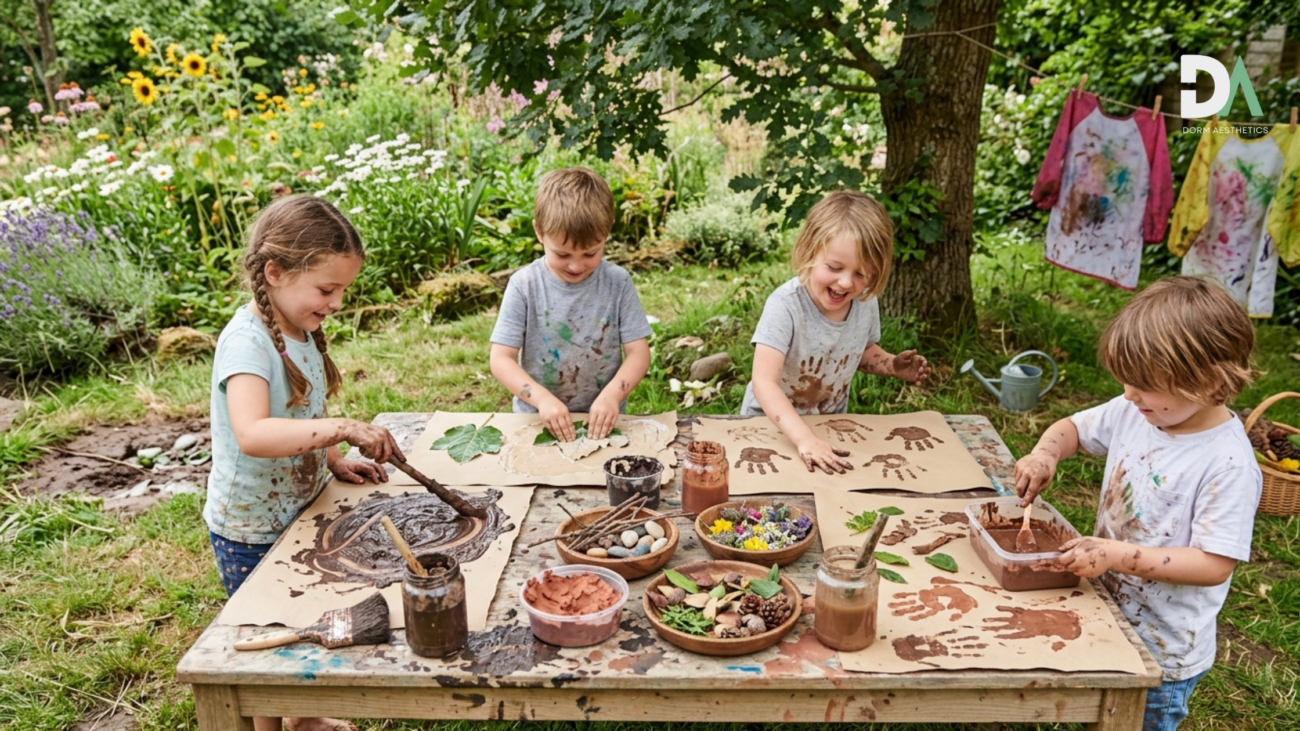
A Creative Messy Art Mud Station is fun because it lets children explore art in a completely hands-on and sensory way. Kids love getting messy while mixing, shaping, and painting with natural materials, which boosts creativity and imagination. There is no “right or wrong” result, so it encourages free expression and confidence.
The materials needed include safe mud or soil, water, paint, brushes, sticks, leaves, small containers, aprons, and a covered outdoor or washable play area.
This activity is especially enjoyable for toddlers and primary school children (ages 3–10). Younger kids enjoy the sensory play, while older children enjoy creating patterns, sculptures, and nature-inspired artwork.
Related Article:modern porch decor and design ideas
Frequently Asked Questions
What age is best for a mud kitchen?
Most children between the ages of 2 and 10 enjoy mud kitchen activities. Younger children should always be supervised during play.
How do you make a simple mud kitchen?
You can create a simple mud kitchen using an old table, wooden pallets, or a small outdoor bench along with bowls, utensils, and natural materials.
What materials can children use in a mud kitchen?
Children can use mud, water, sand, leaves, flowers, grass, stones, and other natural materials to create imaginative recipes and play experiences.
Are mud kitchens safe for children?
Yes, mud kitchens are generally safe when children are supervised and play with clean, non-toxic materials.
How do you keep a mud kitchen clean?
Regularly rinse utensils, replace dirty water, and remove any damaged materials to keep the play area clean and safe.
Why are mud kitchens good for child development?
Mud kitchens support creativity, sensory development, problem-solving, communication skills, and imaginative play while encouraging outdoor activity.
Final Thoughts
Summer mud kitchen activities provide endless opportunities for outdoor fun, creativity, and learning. Whether children are creating pretend recipes, running a mud café, or exploring nature-inspired play, a mud kitchen encourages hands-on experiences that support healthy development. With a few simple supplies and a little imagination, you can create an outdoor play space that children will enjoy all summer long.